City Parking
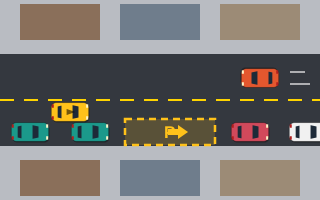
City blocks with curbs, street parking and light moving traffic. Park before the timer ends.
Traffic parking games add something the rest of the site does not have: other cars that move. Parked cars and walls stay put, but traffic cars keep driving, so a gap that is open now may be closed in a second. Touching a moving car counts as a collision, just like hitting anything else.
That changes the skill being tested. You still need a clean line and a tidy finish inside the bay, but timing matters more than speed. Watching the traffic pattern, waiting for a gap and committing without hesitating are what keep your collision count down. Braking to wait costs nothing, while every collision costs 100 points and slows you down. The traffic in these games is simple and predictable, which makes it something you can learn rather than just react to.
Two games bring traffic into play. Traffic Parking is set in parking lots where cars loop along the aisles, getting faster and denser across five levels, with a collision limit of 3. City Parking moves to city blocks with roads, curbs and street parking, where lighter traffic runs along the road and each of the four levels has a time limit. If the curbside spaces there feel tricky, the parallel parking games are a good place to practice without traffic.
City blocks with curbs, street parking and light moving traffic. Park before the timer ends.
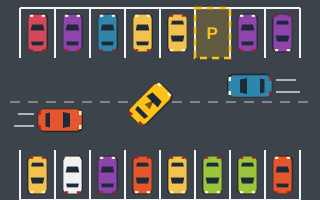
Cars loop the aisles and get faster each level. Time your moves and park with 3 collisions max.
No games in this category match these filters.
Gameplay tips only — arcade physics are simplified and are not real-world driving advice.
Learn the keyboard and touch controls, read the HUD, and finish your first parking level step by step, from finding the bay to the half-second Hold.
Twelve mistakes that cost points in parking arcade games, from overholding reverse to ignoring bay arrows, with specific fixes for each Play Parking game.
How arcade parking game physics work: the frame loop, delta time, friction, reverse speed, bounce-back collisions and the bay check that decides a park.
Yes. Contact with a moving traffic car counts as one collision, costs 100 points and bounces your car back.
No. It follows simple, predictable lanes. In Traffic Parking it loops the aisles and gets faster and denser each level.
Traffic Parking is rated Hard, with busier traffic and a 3-collision limit. City Parking is rated Medium, with lighter traffic but a time limit.


